Executive Summary: Why ISO 17025 Lab Testing Protects European CBD Brands
In Europe's regulated cannabinoid supply chain, a Certificate of Analysis (COA) from an independent ISO/IEC 17025 accredited laboratory is the single most important commercial document behind every batch of bulk distillate, isolate, or finished white-label oil. Without verified third-party analytical proof, European customs officers, retail compliance desks, and cosmetic safety assessors will reject a shipment regardless of price.
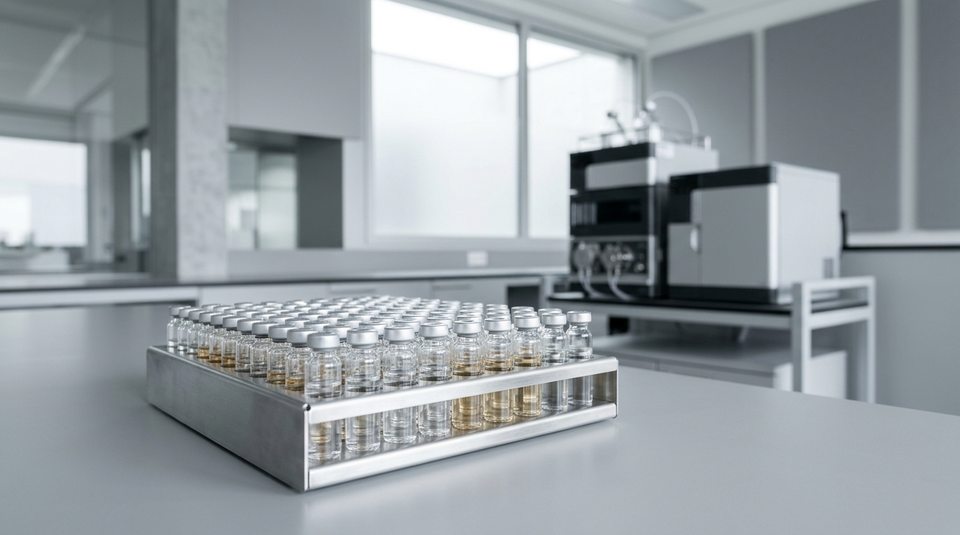
This technical reference explains the exact analytical methods used by accredited European laboratories, the six test panels required for full EU compliance, and a practical 7-point checklist procurement teams use to spot incomplete or unreliable supplier COAs before placing a wholesale order.
The Six Essential European CBD Lab Test Panels
| Test Panel | Analytical Method | What It Measures | Why B2B Buyers Require It |
|---|---|---|---|
| 1. Cannabinoid Potency | HPLC-DAD / UHPLC | CBD, CBDA, CBG, CBN, CBC, Delta-9-THC, Delta-8-THC, THCA | Verifies exact label concentration and proves legal THC compliance (e.g., <0.01% LOQ) |
| 2. Heavy Metals | ICP-MS | Lead (Pb), Arsenic (As), Cadmium (Cd), Mercury (Hg) | Hemp is a bioaccumulator; proves compliance with EU Regulation 2023/915 & cosmetic limits |
| 3. Pesticides | LC-MS/MS & GC-MS/MS | 300-500+ agricultural pesticide residues | Confirms clean EU-catalogue cultivation and zero prohibited plant-protection chemicals |
| 4. Residual Solvents | Headspace GC-MS | Ethanol, butane, heptane, pentane, acetone, methanol | Confirms ICH Q3C Class 2/3 safety after extraction and winterization |
| 5. Mycotoxins | LC-MS/MS | Aflatoxins B1, B2, G1, G2 and Ochratoxin A | Confirms clean drying, storage, and absence of fungal toxins in botanical biomass |
| 6. Microbiology | ISO / Ph. Eur. Plate Counts | Total aerobic count (TAMC), yeast/mold (TYMC), E. coli, Salmonella | Mandatory for GMP food-grade, cosmetic CPSR/PIF, and retail shelf-life sign-off |
HPLC vs. GC-MS: Why Potency Testing Method Matters
Procurement managers frequently ask why accredited European laboratories use High-Performance Liquid Chromatography (HPLC-DAD) rather than Gas Chromatography (GC) for cannabinoid potency assays.
The reason is thermal decarboxylation. Gas chromatography vaporizes the sample at temperatures above 200 C, which converts acidic cannabinoids (CBDA and THCA) into neutral CBD and THC during the test itself. By contrast, HPLC runs at ambient or low controlled temperature, accurately separating and quantifying both acidic precursors (CBDA, THCA) and neutral cannabinoids (CBD, Delta-9-THC, CBG, CBN) simultaneously. That precision is critical when calculating Total THC (`Delta-9-THC + 0.877 x THCA`) for UK Home Office and EU customs compliance.
Understanding LOD and LOQ on a Cannabinoid COA
Two acronyms appear on every legitimate chromatography report:
- LOD (Limit of Detection): The lowest concentration of a compound the instrument can distinguish from background noise.
- LOQ (Limit of Quantification): The lowest concentration the laboratory can measure with validated numerical accuracy (typically `0.005%` to `0.01%` for THC on modern European UHPLC systems).
When a COA lists "
7-Point B2B Audit Checklist: How to Verify Any Supplier COA
Before wiring a deposit on bulk cannabinoids or white-label finished goods, inspect every COA against these seven checks:
- ISO/IEC 17025 accreditation number: Confirm the laboratory holds active accreditation from a recognized European national body (such as RvA, DAkkS, COFRAC, UKAS, or Accredia) covering cannabinoid testing.
- Batch number match: The lot/batch ID on the COA must match the exact batch code printed on the drum, carton, and commercial invoice.
- Recent test date: Avoid generic COAs dated 12-24 months earlier; request fresh batch-specific testing.
- Full cannabinoid + Total THC calculation: Ensure both Delta-9-THC and THCA are quantified individually alongside Total THC.
- Explicit LOQ values: Reject reports that print "0.00%" without stating the laboratory's Limit of Quantification.
- Contaminant coverage: Potency alone is never enough for EU retail or CPNP cosmetics; verify heavy metals, pesticides, residual solvents, mycotoxins, and microbiology.
- Direct lab verification: Legitimate European labs include a QR code, report ID, or signatory contact so buyers can confirm authenticity directly.
EU Regulatory Contaminant Benchmarks to Watch in 2026
European retailers, pharmacy buyers, and cosmetic toxicologists benchmark every batch COA against harmonized European food and cosmetic safety standards:
- Heavy Metals (EU Reg 2023/915 & ISO 22716): Lead (Pb), Cadmium (Cd), Arsenic (As), and Mercury (Hg) must sit cleanly below strict parts-per-million ceilings (commonly `<0.5 ppm` to `<3.0 ppm` depending on matrix and product category).
- Residual Solvents (ICH Q3C / Ph. Eur.): Ethanol extraction and winterization residues must test well below Class 3 safety limits (`<=5,000 ppm`, with premium European distillates routinely below `500 ppm` or non-detectable) and zero Class 1 toxic solvents.
- Mycotoxins & Microbiology: Aflatoxin B1 (`<=2.0 ug/kg`), combined Aflatoxins B1+B2+G1+G2 (`<=4.0 ug/kg`), and Ochratoxin A must register clean alongside European Pharmacopoeia microbial limits (`TAMC <=1,000 CFU/g`, `TYMC <=100 CFU/g`, and absence of E. coli, Salmonella, S. aureus, and P. aeruginosa in cosmetics).
- QR-Code Consumer Transparency: Leading European white-label brands link every printed bottle batch number directly to its matching ISO 17025 PDF report, building instant buyer confidence with distributors, customs brokers, and end consumers.
Batch-Traceable ISO 17025 Supply for European B2B Brands
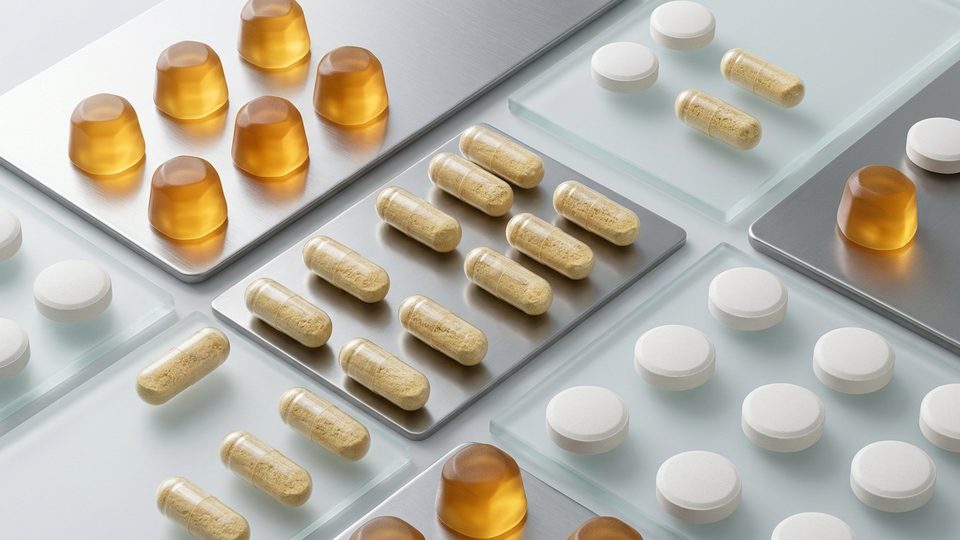
Every bulk extract, white-label oil, gummy, capsule, and cosmetic batch shipped through our European desk is tested by independent ISO/IEC 17025 accredited laboratories. Explore Bulk CBD, White Label CBD, and CBD Oil Blends, or contact Paul and our European B2B team below to request sample batch COAs and our 2026 wholesale price list within 24 business hours.